
Most people scroll past ads without a second thought. But a video of someone genuinely using a product – talking about it in their own words, in their own space – tends to stop the scroll.
That’s the core idea behind UGC video, and it’s why so many brands are rethinking their ad strategy right now.
If you’ve been wondering what UGC video actually means, how it compares to traditional advertising, or whether it’s worth exploring for your brand – this blog covers all of it clearly.
What Is UGC Video? (UGC Video Full Form Explained)
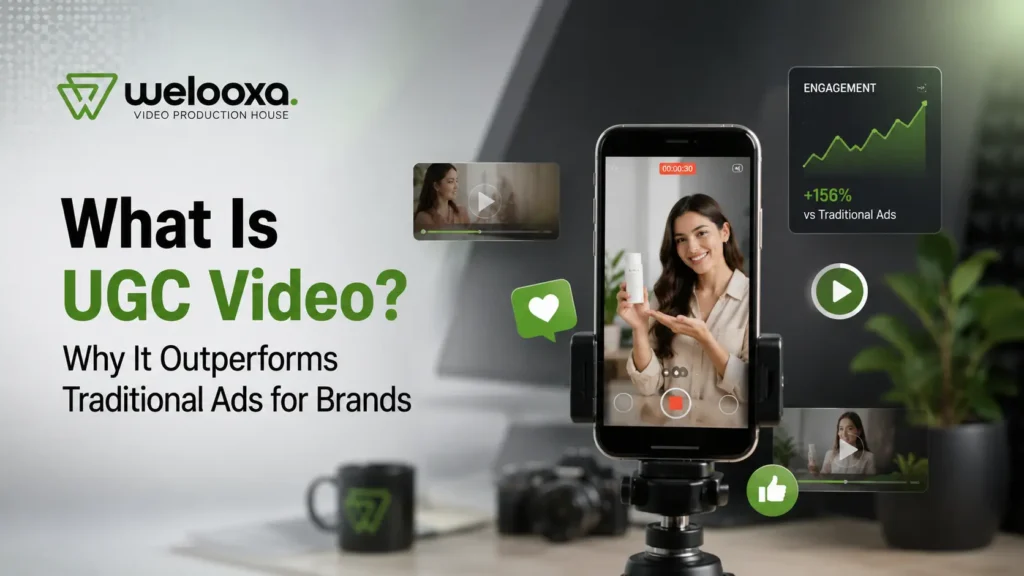
UGC stands for User-Generated Content. A UGC video, specifically, is any video content created by real people – customers, users, or content creators – rather than a brand’s internal production team.
Think of it as the video equivalent of a product review. Instead of a polished studio ad, you’re seeing someone film themselves using a skincare product in their bathroom, unboxing a gadget at their kitchen table, or sharing an honest opinion about a service they’ve tried.
This type of consumer-generated video feels different from traditional advertising – because it is. It mirrors how people naturally talk about products in their day-to-day lives.
What Are Examples of UGC Videos?
UGC videos show up in more places than you might expect:
- Product review videos: Someone records their genuine experience after purchasing an item
- Unboxing videos: Real-time reactions to receiving and opening a package
- Tutorial or how-to videos: A customer showing others how they use a product
- Testimonial clips: Short, conversational videos where someone shares what worked for them
- Social media story content: Quick, authentic clips posted by real users tagging a brand
These are all examples of audience-produced video that brands are now actively incorporating into paid and organic campaigns.
UGC Video vs Traditional Ads: What’s the Real Difference?
This is the question most marketing managers end up asking once they start looking into UGC seriously.
Here’s a straightforward breakdown:
| Factor | UGC Video | Traditional Ads |
| Production | Filmed by creators or customers | Produced by agencies or in-house teams |
| Cost | Generally lower | Higher (studio, crew, editing) |
| Feel | Natural, personal, relatable | Polished, scripted, brand-controlled |
| Trust Factor | Perceived as more honest | Perceived as promotional |
| Platform Fit | High on TikTok, Instagram Reels, YouTube Shorts | Better fit for TV, display, YouTube pre-rolls |
| Turnaround | Fast | Slower production cycles |
Traditional ads are not “bad” – they serve a purpose, especially for brand awareness at scale. But for driving clicks, conversions, and actual purchase decisions, UGC video consistently outperforms because it reduces the skepticism people bring to branded content.
When viewers see a real person explain why they liked something, it reads as a recommendation rather than a pitch. That psychological shift makes a measurable difference in how people respond.
Why UGC Video Outperforms Traditional Ads for Brands
Let’s get into the specifics.
1. It Matches How People Actually Make Decisions
Before buying most products today, people look for real proof. They search YouTube, check TikTok, browse Reddit. They want to see the product in use – not on a polished set with perfect lighting.
UGC video fits directly into that research behavior. When your ad looks like the content someone would organically find while searching, it doesn’t feel like an interruption. It feels relevant.
2. The Trust Gap Is Real
Consumers are more aware than ever that ads exist to sell them something. That awareness creates natural resistance. UGC videos, especially those from creators who speak conversationally and show real use cases, lower that resistance significantly.
This is particularly important for brands selling products where trust matters – health, wellness, finance, parenting, or anything where the buyer needs to feel confident before committing.
3. Lower Production Cost, Higher Testing Volume
One of the most practical advantages of UGC video content for brands is the ability to test more creatives without the cost of traditional production. You can run five different UGC-style ad variations and see which message, format, or creator style resonates most – at a fraction of what a single traditional ad would cost.
This gives marketing teams real data to optimize from, rather than betting everything on one expensive campaign.
4. Platform Algorithms Favor It
Short-form video platforms like TikTok and Instagram Reels are built around content that looks native to the platform. Highly produced traditional ad content often gets lower organic reach because it signals “this is an ad.” UGC-style content blends in – and that helps it perform better both organically and in paid placements.
How to Create UGC Videos for Your Brand
You don’t need a large team or a big budget to start. Here’s how brands typically approach it:
Option 1: Work with UGC video creators
These are content creators (not necessarily influencers) who specialize in filming authentic-style product videos. You provide the product, brief, and usage angle – they produce the content for you to use in ads.
Option 2: Encourage customers to share
Post-purchase emails, packaging inserts, or loyalty programs can prompt real customers to submit video reviews. Some brands offer small incentives or feature customer content on their channels.
Option 3: Use a UGC video creator AI tool
There are now AI-assisted platforms that help brands generate UGC-style video scripts, match them with creators, or even simulate authentic-style video formats. These tools are particularly useful when you need volume fast or want to scale your testing across multiple ad sets.
UGC Video Content Guidelines for Brands
Before you launch UGC videos as paid ads, a few things to keep in mind:
- Always get usage rights: Whether you’re working with a creator or a customer, confirm in writing that you can use the content in paid media.
- Don’t over-direct: The more scripted and polished a UGC video becomes, the less authentic it feels. Give creators key talking points, not a full script.
- Keep it platform-appropriate: Vertical video for Instagram and TikTok, horizontal for YouTube. Format matters.
- Test hooks early: The first 3 seconds determine whether someone keeps watching. Test different openers.
- Disclose when required: If a creator is being paid, make sure disclosures are in place per your local advertising guidelines.
What Is the Difference Between UGC and Traditional Ads? (Quick Summary)
To put it simply:
- Traditional ads are brand-controlled, professionally produced, and often feel like ads.
- UGC videos are creator or customer-made, feel natural and personal, and carry the credibility of a real recommendation.
Both have a place in a well-rounded marketing strategy. But for brands focused on improving ad efficiency and conversion rates, UGC video gives you more to work with – more formats to test, more authentic storytelling, and a better match for how people consume content today.
Conclusion
UGC video isn’t a trend that’s about to fade. It reflects a real shift in how people interact with content and make buying decisions online. Brands that understand this – and build it into their marketing approach – tend to see better results across paid campaigns, organic reach, and customer trust.
Frequently Asked Questions
1. What does UGC video mean?
UGC video (User-Generated Content video) refers to video content created by real users, customers, or creators rather than a brand’s own production team. It’s designed to feel authentic and relatable.
2. What is the full form of UGC in marketing?
UGC stands for User-Generated Content. In video marketing, it refers specifically to videos made by everyday people or creators on behalf of or about a brand.
3. Are UGC videos effective for paid ads?
Yes. UGC-style video ads often outperform polished traditional creatives in paid social campaigns because they feel more native to the platform and carry higher perceived authenticity.
4. Can AI be used to create UGC videos?
Yes. There are UGC video creator AI tools that help brands scale content creation by generating scripts, briefing creators, or producing UGC-style video at volume. They’re useful for brands that need consistent and creative output.
What platforms work best for UGC video ads?
TikTok, Instagram Reels, and Facebook are the strongest platforms for UGC-style video ads right now. YouTube Shorts is also growing quickly as a placement option.