 Our ServicesProduction Services That Speak Volumes
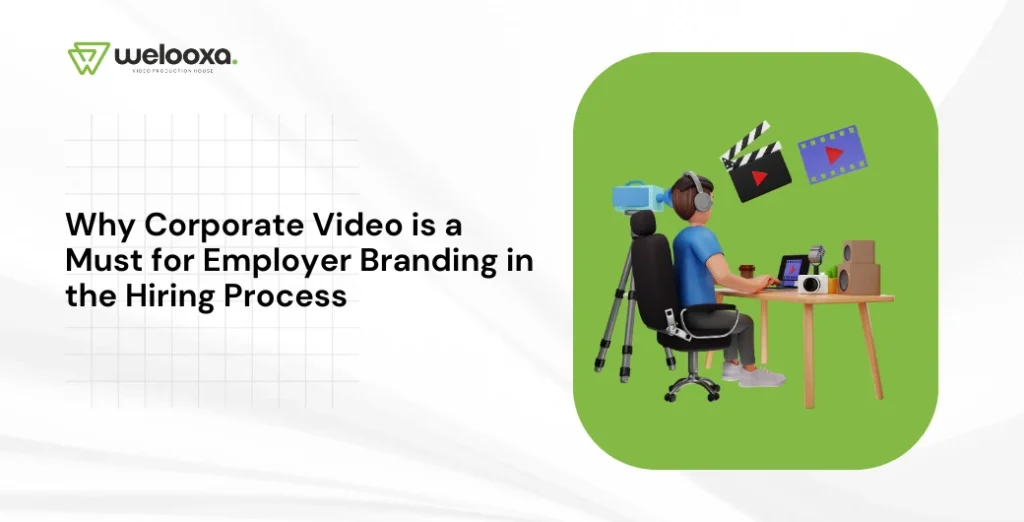
Corporate video is a must for employer branding because it shows candidates what a company is really like before they apply: the people, the workplace, the culture and the work itself. A good employer branding video builds trust faster than text, attracts candidates who fit the culture, and reduces drop-off and early turnover. Job posts with video have been shown to get more views and a higher application rate.
Hiring is now a two-way decision. Candidates research employers as carefully as employers screen candidates. They read reviews, check social media, watch videos and ask, “Would I actually want to work there?”
That’s where employer branding comes in. Your employer brand is the reputation your company has as a place to work, and it shapes who applies, who accepts your offer and who stays. In a competitive talent market, a vague careers page and a generic job description are no longer enough.
Corporate video is one of the most effective ways to strengthen that reputation. A well-made employer branding video lets candidates see your workplace, hear from your team and feel your culture in two minutes, something a page of text can’t do.
This guide is written by the team at Welooxa, a corporate video production company in Gandhinagar that has produced brand, corporate and social videos for businesses since 2020. It explains why video matters for employer branding, which types to make, how to produce them and how to measure the results.
Understanding Employer Branding
What Is Employer Branding?
Employer branding is how a company presents itself as a place to work, and how current employees, candidates and the public perceive it. It covers your culture, values, leadership, growth opportunities, pay and benefits, and the everyday experience of working there.
Every company has an employer brand, whether it manages it or not. The difference is whether that reputation is shaped deliberately, or left to job-site reviews and word of mouth.
Why Employer Branding Matters in Recruitment
Candidates actively research employers before they apply:
- In a Glassdoor and Harris Poll survey, 83% of job seekers said they’re likely to research company reviews and ratings when deciding where to apply, and 53% look for more company information after reading a job post.
- The same Glassdoor data found that job seekers are seven times more likely to apply after seeing a company’s brand ten or more times.
- In HireClix’s 2025 Candidate Experience Survey of 1,000 US job seekers, more than half of Gen Z and Millennial candidates said they check a company’s social media before applying.
A strong employer brand also lowers hiring costs. LinkedIn’s research (2015) found that companies with a strong talent brand spent 43% less per hire on the platform and received 2.5 times more applicants per job post. The data is older, but the principle holds: when candidates already know and trust you, attracting them costs less.
The Role of Corporate Video in Shaping Perceptions
Candidates want proof, not slogans. Words like “great culture” and “people-first” appear on almost every careers page. Video lets candidates judge for themselves.
A corporate video shows:
- Real people: The faces, voices and personalities of the team a candidate would join
- Real places: The office, factory floor, lab or site where they would work
- Real work: What a typical day involves, including the challenges
- Real values: How leaders talk, how teams collaborate and what the company celebrates
That visible proof is what makes video one of the most persuasive employer branding strategies available.
The Impact of Corporate Video on Employer Branding
How Corporate Videos Communicate Company Culture
Culture is hard to describe and easy to see. A company culture video captures the details that text misses: how people greet each other, how meetings feel, how teams celebrate wins and handle pressure.
Video communicates culture in four ways:
- Authentic voices: Employees explaining in their own words why they joined and why they stay
- Visual context: Workspaces, tools, team rituals and events
- Emotional connection: Music, pacing and storytelling that make candidates feel something
- Leadership presence: Founders and managers sharing the company’s mission and expectations directly
It also sets honest expectations. A video showing shift work in a manufacturing plant, or a fast-paced agency environment, helps candidates decide early whether the role suits them. That honesty reduces mismatched hires and early resignations.
Enhancing Engagement With Potential Candidates
Video is more engaging than text on job boards, careers pages and social feeds. According to an internal CareerBuilder study cited by LinkedIn, job postings with video received 12% more views and a 34% higher application rate than postings without video.
Video improves engagement across the hiring journey:
| Hiring stage | How video helps |
|---|---|
| Awareness | Social clips introduce your company to passive candidates |
| Interest | Culture and team videos give candidates reasons to explore further |
| Application | Role videos in job posts answer questions and encourage applications |
| Interview | Office tours and “meet the team” videos reduce nerves and no-shows |
| Offer | Leadership and benefits videos help candidates say yes |
| Onboarding | Welcome videos help new hires settle in faster |
Types of Employer Branding Videos
Different employer branding videos serve different goals. Most companies benefit from a mix of the following.
Corporate Recruitment Videos
A corporate recruitment video is focused on hiring. It explains who you’re looking for, what roles involve and why candidates should apply.
Common formats include:
- Role-specific job videos: A hiring manager explaining a role, its responsibilities and growth path
- Department videos: A short look at how a team such as engineering, sales or operations works
- Graduate and internship videos: Programmes for freshers and campus recruitment
- Interview process videos: What to expect at each stage of hiring
Recruitment videos work best when they’re short, specific and placed directly in job posts and on careers pages.
Company Culture Videos
A company culture video focuses on what it feels like to work at your company. It isn’t about a specific role; it’s about people, values and environment.
Popular formats:
- Employee testimonials: Team members sharing their experience and career journey
- Day-in-the-life videos: Following one employee through a typical day
- Office or site tours: Showing workspaces, facilities and amenities
- Values in action: Real examples of the company living its values, such as community work, training or celebrations
- Leadership messages: Founders explaining the mission and what they look for in people
Recruitment Marketing Videos
Recruitment marketing videos promote your employer brand to a wider audience, often including passive candidates who aren’t actively job-hunting.
Examples include:
- Short social clips: Reels, Shorts and LinkedIn videos about team moments, achievements and events
- Employer brand films: A polished 2–3 minute video that sums up who you are as an employer
- Event and hiring-drive videos: Coverage of walk-in drives, job fairs and campus visits
- Paid recruitment ads: Targeted video ads on LinkedIn, Instagram or YouTube
| Video type | Main goal | Ideal length | Where to use it |
|---|---|---|---|
| Corporate recruitment video | Drive applications for specific roles | 60–120 seconds | Job posts, careers page |
| Company culture video | Show what it’s like to work there | 1–3 minutes | Careers page, LinkedIn, YouTube |
| Recruitment marketing video | Build awareness with talent | 15–60 seconds | Social media, ads |
Corporate Video Production Tips
Great corporate video production for employer branding is less about expensive equipment and more about honesty, planning and storytelling.
Key Elements to Include in an Employer Branding Video
- A clear message: Decide the one thing candidates should remember, such as “You’ll learn fast here” or “We build things that matter”.
- Real employees, not actors: Authentic team members are more believable and relatable.
- Your employer value proposition: Explain what you offer, such as growth, stability, flexibility, learning or meaningful work.
- Specific details: Real projects, tools, training programmes and career paths are more convincing than general claims.
- Diversity of voices: Include people from different roles, levels, backgrounds and locations.
- The workplace itself: Show where people work, not just interviews in a meeting room.
- A clear call to action: Tell viewers where to see open roles and how to apply.
Best Practices for Production and Storytelling
- Start with a strong hook. Open with a powerful line from an employee, an interesting moment or a surprising fact about the company.
- Tell stories, not lists. A story about one employee’s growth from intern to team lead is more memorable than a list of benefits.
- Let employees speak naturally. Use conversational interview questions instead of scripts, then edit for clarity.
- Balance polish and authenticity. Professional lighting and sound make people look their best, but don’t over-script or over-edit the personality away.
- Keep it short. Most recruitment videos work best at one to two minutes, which matches LinkedIn’s guidance for job description videos.
- Add captions. Many people watch on mute, and captions make videos accessible and easier for search engines and AI tools to understand.
- Film several cuts in one shoot. Capture enough footage for a main film, role videos and short social clips.
- Get consent. Get written consent from everyone featured, and use licensed music and images.
- Keep it current. Update videos when your office, leadership or benefits change, so candidates aren’t misled.
Working with a specialist corporate video production company helps you plan interviews, direct non-actors, capture high-quality footage and edit everything into a consistent employer brand story. To budget for it, see our guide to corporate video production cost in India.
Video Marketing Strategies for Recruitment
Even the best video won’t help hiring if candidates never see it. Effective video marketing for recruitment combines smart distribution with clear measurement.
How to Distribute and Promote Employer Branding Videos
- Careers page: Feature your main employer brand film at the top, and add culture and team videos further down.
- Job postings: Embed or link a recruitment video in every relevant job ad on LinkedIn, Naukri, Indeed and your website.
- LinkedIn: Post short videos on your company page, and encourage employees to share them. Employee shares reach networks your page can’t.
- Instagram and YouTube: Share culture clips as Reels and Shorts, and host longer videos on YouTube for search visibility.
- Paid promotion: Run targeted LinkedIn video ads to reach candidates by job title, skills, industry and location.
- Email and outreach: Add videos to recruiter outreach, interview invitations and offer letters.
- Campus and events: Play your employer brand film at job fairs, campus drives and webinars.
- Onboarding: Use welcome videos to continue the experience after the offer is accepted.
Measuring the Success of Video Marketing Campaigns
Track metrics at each stage of the hiring funnel:
| Metric | What it shows | Where to find it |
|---|---|---|
| Views and average watch time | Whether the video holds attention | YouTube, LinkedIn, Instagram analytics |
| Careers page engagement | Time on page and clicks to job listings | Google Analytics 4 |
| Job post views and apply rate | Whether video lifts applications | Job boards, ATS |
| Application quality | How many applicants meet the criteria | ATS, recruiter feedback |
| Offer acceptance rate | Whether candidates choose you | HR records |
| Cost per hire | Efficiency of recruitment spend | HR and finance data |
| Early turnover (first 90 days) | Whether expectations matched reality | HR records |
How to test impact: Compare similar job posts with and without video for four to six weeks. Add a question to your application form or interviews, such as “What made you apply?”, to see how often candidates mention your videos. Use UTM links on video posts to track clicks through to your careers page.
Conclusion
Candidates research employers before they apply, and they trust what they can see. Employer branding videos give them that proof: real people, real workplaces and a real sense of your culture. Used well, corporate video attracts better-matched candidates, raises application and acceptance rates, and reduces costly early turnover.
Start with a main employer brand film, add short recruitment videos for key roles, share culture clips regularly and measure the results against your hiring goals. Over time, video becomes one of the most valuable assets in your recruitment strategy.
Ready to show candidates why your company is a great place to work? Explore Welooxa’s corporate video production services, browse our portfolio, or contact our teamto plan your employer branding video.
Frequently Asked Questions
What is an employer branding video?
An employer branding video is a video that shows what it’s like to work at a company. It features real employees, the workplace, the culture and the company’s values, so candidates can decide whether they want to join.
How long should a corporate recruitment video be?
Most corporate recruitment videos work best at one to two minutes. Main employer brand films can run two to three minutes, while social media clips are usually 15–60 seconds.
What are the benefits of using video for recruitment?
Video helps candidates understand your culture, increases engagement with job posts, attracts better-matched applicants, improves offer acceptance and can reduce early turnover by setting honest expectations.
What is the difference between a recruitment video and a company culture video?
A recruitment video focuses on specific roles and encourages applications. A company culture video shows the overall experience of working at the company, without focusing on one job.
Should we use real employees or actors?
Use real employees wherever possible. Candidates find them more believable, and they show your actual culture. A professional crew can help non-actors feel comfortable on camera.
How often should we update employer branding videos?
Review them at least once a year, and update them sooner if your office, leadership, benefits or culture change significantly.